

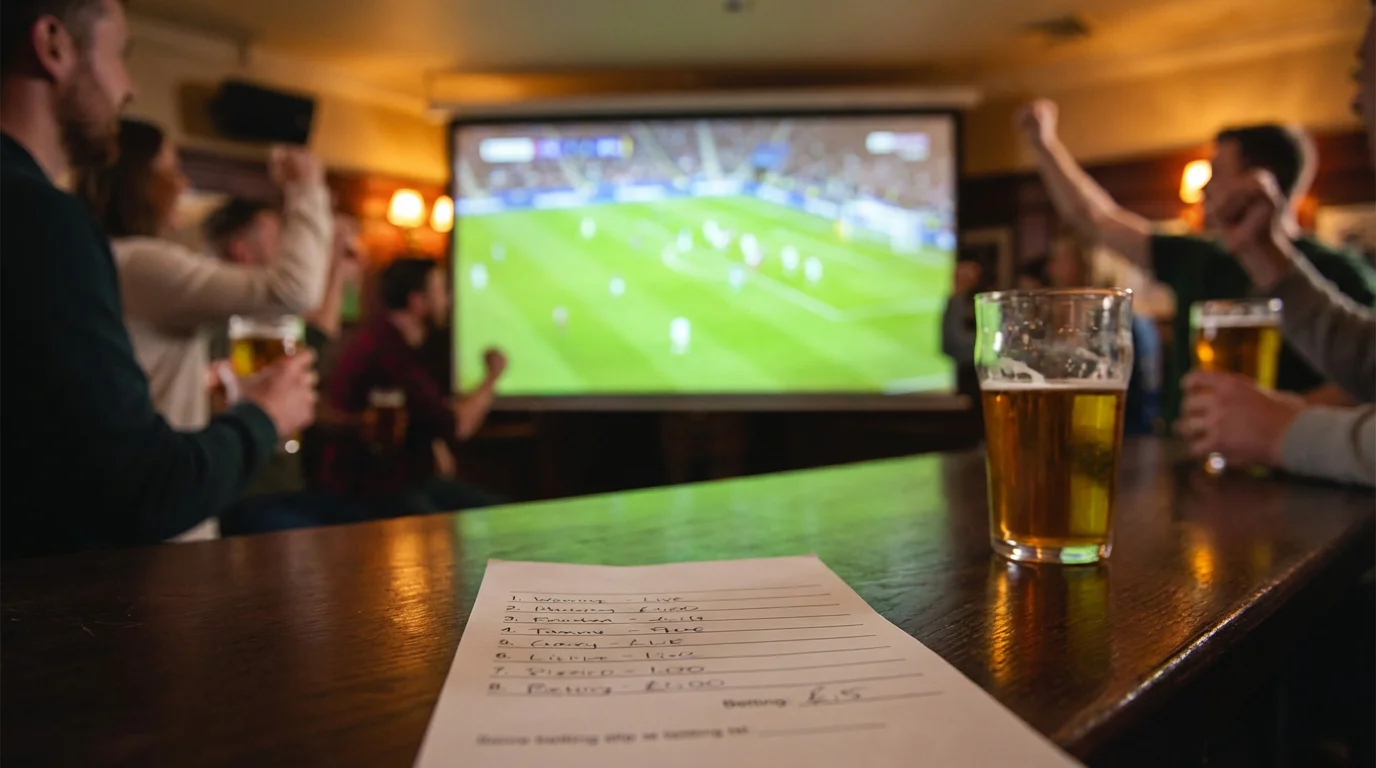
The same game parlay — known as the bet builder in UK markets — is the betting product that bookmakers most aggressively promote and most quietly profit from. The concept is seductive: combine multiple selections from a single match into one bet, multiplying the odds together for a potentially massive payout from a small stake. Pick a team to win, a player to score, and over 2.5 goals in the same match, and the combined odds can reach 8.00 or higher.
The reason bookmakers love same game parlays is the same reason bettors love them: the odds are big. The difference is that big odds mean low probability, and the correlation between selections — the fact that a team winning makes certain other outcomes more likely — is not always fully reflected in the pricing. Understanding how SGPs work, where the bookmaker builds in margin, and how to construct parlays that are genuinely well-reasoned is the gap between entertainment betting and strategic betting.
Football Same Game Parlay Mechanics
A same game parlay lets you combine two or more selections from the same match into a single bet. Unlike traditional accumulators, where each leg comes from a different match, SGP selections are all drawn from one fixture. The bookmaker calculates the combined odds using a model that accounts for the statistical relationships between your selections — because the outcomes within a single match are not independent.
This is the crucial distinction. In a traditional accumulator, whether Arsenal wins and whether Bayern Munich wins are statistically independent events. In a same game parlay, whether Arsenal wins and whether an Arsenal player scores first are correlated — if Arsenal wins, it is more likely that an Arsenal player scored first. The bookmaker’s SGP model adjusts the odds to account for these correlations, which is why the combined price on a same game parlay is typically lower than what you would get if you multiplied the individual odds together manually.
The sophistication of this correlation modelling varies by bookmaker. Some platforms use advanced statistical models that accurately capture the relationships between selections. Others use simpler heuristic adjustments that can either overestimate or underestimate correlation in specific situations. When the bookmaker’s model underestimates the correlation between your selections — meaning the outcomes are more likely to occur together than the model assumes — the SGP price is more generous than it should be. This is where value exists.
The Correlation Factor: Where Value Hides
Correlation is the engine that drives same game parlay pricing, and understanding it is the single most important skill for SGP bettors. Positive correlation means two outcomes are more likely to happen together than chance would suggest. Negative correlation means they are less likely to co-occur.
A classic positive correlation: backing a team to win and backing a player from that team to score. If the team wins, they almost certainly scored, and their best attacker is a likely scorer. The bookmaker knows this and adjusts the combined odds downward. But the degree of adjustment is where the interesting questions live. A team can win 1-0 on an own goal, meaning their star striker did not score despite the team winning. The bookmaker’s model may not perfectly capture this edge case, and across many SGPs, these small modelling imperfections can create persistent value.
A subtler correlation: backing over 2.5 goals and both teams to score. These outcomes are positively correlated — if there are three or more goals, both teams having scored is more likely than if there were only one or two goals. But they are not perfectly correlated: a match can finish 3-0 with over 2.5 goals but BTTS no. The question is how accurately the bookmaker’s model captures this partial correlation. If the model oversimplifies — treating the two as essentially the same bet — the combined odds will be too low. If the model is imprecise in the other direction, the odds may be too generous.
The practical takeaway is to look for combinations where you believe the correlation between selections is stronger or weaker than the bookmaker’s model assumes. This requires thinking about how match events connect to each other, which is a different analytical skill from simply assessing the probability of individual outcomes.
Building a Well-Structured Same Game Parlay
The architecture of your SGP matters as much as the individual selections. A well-structured same game parlay tells a coherent story about how you expect the match to unfold. A poorly structured one is a collection of independent opinions jammed into a single bet for the sake of bigger odds.
Start with a match thesis. Before adding selections, decide what you think will happen in the match. Will it be an open, high-scoring game? Will the home team dominate possession and create chances from the flanks? Will the match be tight with few goals and the result decided by a set piece? Your thesis should inform every selection — if you expect a low-scoring match, do not add over 2.5 goals just to boost the odds.
Limit the number of legs. Every selection you add reduces the probability of the overall bet winning. A two-leg SGP with a team to win and over 1.5 goals might have a realistic 35-40% chance of success. A five-leg SGP with the same team to win, over 2.5 goals, a player to score, over 9.5 corners, and a player to be carded might look exciting at odds of 25.00, but the probability is well below 5%. The sweet spot for most bettors is two to three selections that are internally consistent and backed by analysis.
Avoid mixing negatively correlated selections. Backing under 2.5 goals and a specific player to score anytime is negatively correlated — fewer total goals means fewer opportunities for any individual to score. The bookmaker’s model should catch this and adjust the odds, but even if it does, you are building a bet that fights against itself. Coherence is not just good strategy; it is the logical foundation of the bet.
Best Bookmakers for Same Game Parlays
The quality of the same game parlay experience varies significantly across platforms, driven by the sophistication of the correlation model, the number of combinable markets, and the flexibility of the bet builder tool.
DraftKings offers one of the most flexible SGP tools in the market. Their bet builder allows you to combine a wide range of markets — match result, player props, corners, cards, and goal timing — and the interface clearly shows how adding or removing a selection changes the combined odds. The correlation model is well-calibrated for the most common combinations, though it can be conservative on less-traded markets.
FanDuel’s SGP builder is similarly polished, with strong coverage of player prop markets and a clean interface that works well on mobile. Their same-game parlay insurance promotions — refunding your stake as a free bet if one leg lets you down — add genuine value to the product and are worth monitoring during promotional periods.
bet365’s bet builder has the deepest market coverage, particularly for European football leagues where DraftKings and FanDuel may have thinner offerings. The ability to combine Asian handicap lines with player props within a single match is a feature that most competitors do not offer. For bettors focused on soccer rather than NFL, bet365’s SGP tool is generally the most comprehensive option.
The Bet That Tells a Story
Same game parlays work best when they tell a story about how you expect a match to unfold — not when they are a random grab bag of selections designed to inflate the odds. A coherent SGP that combines a home win, over 1.5 match goals, and the home team’s striker to have over 1.5 shots on target describes a specific and plausible match scenario. Each selection reinforces the others, and the combined price reflects a genuine probability assessment.
The bettors who consistently extract value from SGPs are the ones who start with analysis and end with a bet slip, not the other way around. They watch matches, study tactical setups, and build a thesis before opening the bet builder. The product is designed to encourage impulse — to make you think “why not add one more leg?” — and resisting that impulse is half the battle. A disciplined two-leg SGP that wins is worth infinitely more than a flashy six-leg SGP that almost landed.
