


Football betting looks simple from the outside. Pick the team you think will win, place your money, and collect your profits when you are right. Millions of people bet on football every week operating under this basic assumption. Most of them lose money consistently. The gap between apparent simplicity and actual complexity explains why bookmakers build lavish headquarters while most bettors quietly deplete their bankrolls.
This guide exists to bridge that gap. We will walk through everything a newcomer needs to understand before placing their first football bet, from the mathematical language of odds to the psychological traps that catch even experienced bettors. The goal is not to transform you into a professional bettor overnight. That takes years of dedicated study and practice that most people neither want nor need. Instead, we aim to make you a competent recreational bettor who understands what they are doing, avoids costly mistakes, and approaches football betting as informed entertainment rather than a path to riches.
Honesty matters here. Bookmakers are profitable businesses employing quantitative analysts, traders, and data scientists specifically to ensure they win more than they lose. You are competing against these professionals every time you place a bet. Understanding this dynamic from the start prevents the dangerous illusion that betting represents easy money. It can be enjoyable, occasionally profitable, and genuinely skill-influenced. It is not a reliable income source for the vast majority of participants.
Understanding Football Betting Odds and Payouts
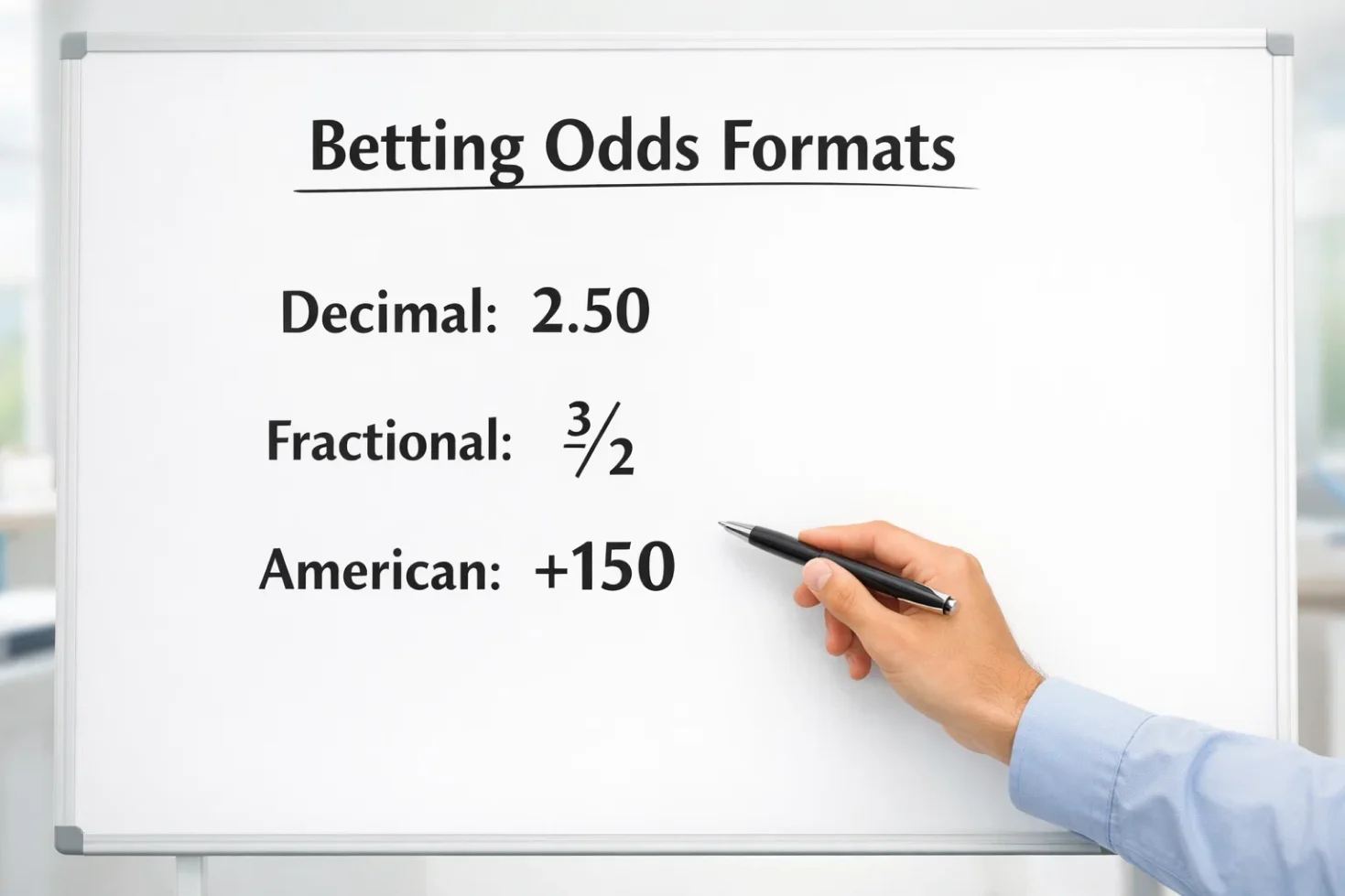
Odds represent the core language of betting. They communicate two related pieces of information: how much you can win relative to your stake, and the implied probability of an outcome occurring. Mastering odds interpretation is non-negotiable for anyone serious about football betting.
Decimal odds have become the global standard and offer the most intuitive format for calculations. A decimal odd of 2.50 means you receive 2.50 pounds for every pound staked if your bet wins. This return includes your original stake, so your profit equals 1.50 pounds per pound wagered. To calculate potential returns, simply multiply your stake by the decimal odds. A twenty-pound bet at 2.50 odds returns fifty pounds, comprising twenty pounds stake return plus thirty pounds profit.
Converting decimal odds to implied probability requires dividing one by the odds and multiplying by one hundred. Decimal odds of 2.50 imply 40% probability (1 divided by 2.50 equals 0.40, times 100 equals 40%). This conversion helps you assess whether odds offer value. If you believe a team has a 50% chance of winning but odds imply only 40% probability, the bet offers positive expected value.
Fractional odds remain common in the United Kingdom and Ireland, expressed as relationships like 5/2 or 3/1. The first number indicates profit relative to the second number as stake. Odds of 5/2 mean five pounds profit for every two pounds staked. To calculate returns, divide the first number by the second, add one, and multiply by your stake. A twenty-pound bet at 5/2 odds returns seventy pounds (5 divided by 2 equals 2.5, plus 1 equals 3.5, times 20 equals 70).
American odds dominate in the United States, using positive and negative numbers relative to one hundred. Positive odds like +250 indicate profit on a hundred-dollar stake. Negative odds like -150 indicate how much you must stake to win one hundred dollars profit. A +250 bet returns your hundred-dollar stake plus two hundred fifty dollars profit. A -150 bet requires staking one hundred fifty dollars to win one hundred dollars profit plus your stake return.
The relationship between formats matters because different bookmakers and regions use different displays. Being comfortable converting between formats allows you to compare odds across platforms regardless of presentation. Many betting sites offer format switching in their settings, but mental conversion ability proves valuable when making quick decisions.
Bookmaker margins hide within odds, creating the house edge that ensures long-term profitability for operators. If a match has two possible outcomes with true 50% probability each, fair odds would be 2.00 on both. Bookmakers instead might offer 1.90 on each, ensuring they profit regardless of outcome. Understanding margin helps you identify which bookmakers offer better value and which markets carry excessive house edges.
Football Betting Markets Explained
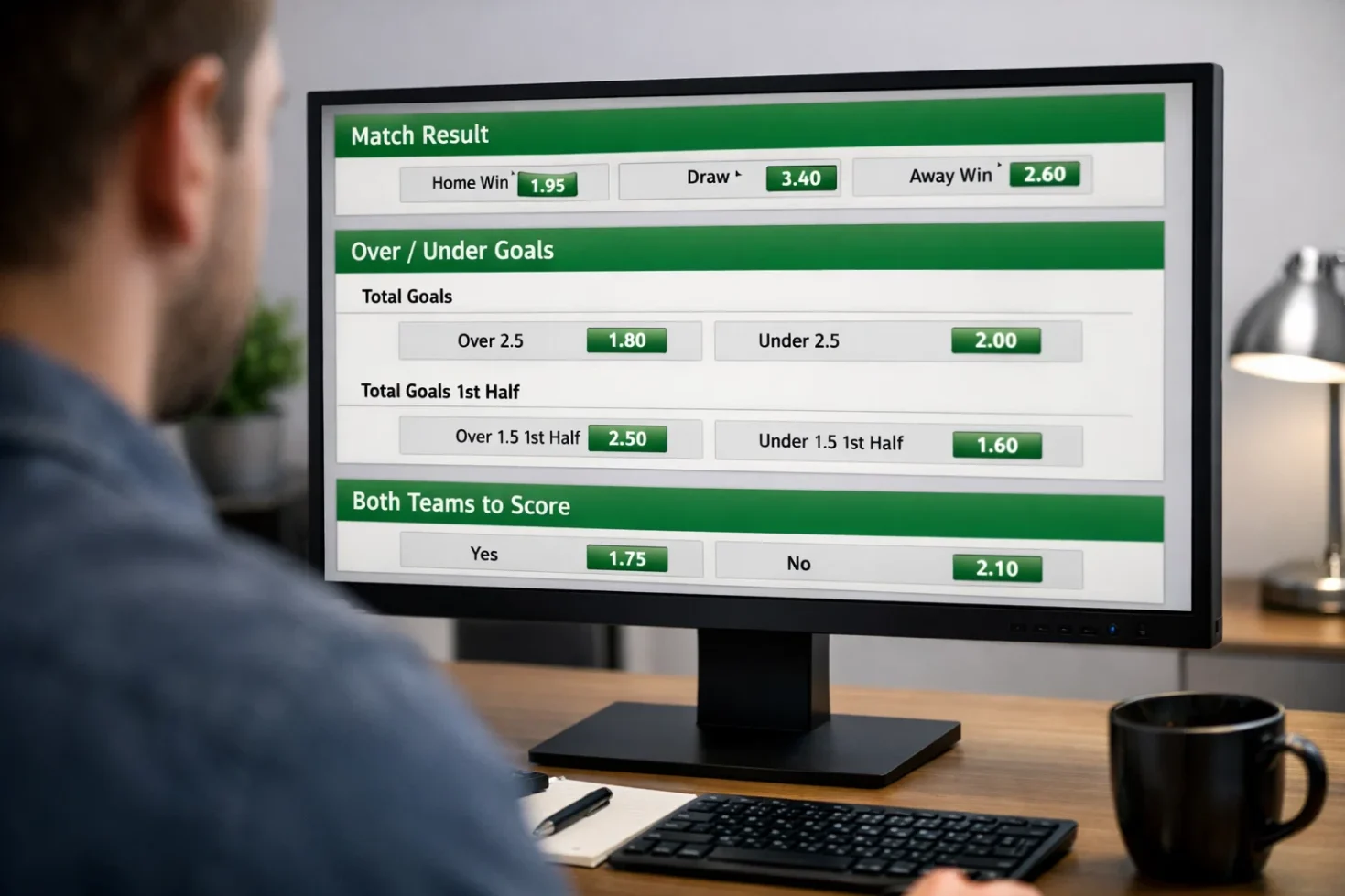
The variety of available betting markets can overwhelm newcomers. Understanding major market types helps you identify opportunities suited to your knowledge and risk preferences.
Match result (1X2) represents the most fundamental football bet. You predict whether the home team wins (1), the match draws (X), or the away team wins (2). Three possible outcomes mean even correct predictions about match character can fail. A dominant team that draws loses your win bet just as completely as if they had lost. The draw possibility creates inherent uncertainty that catches many beginners who underestimate its frequency.
Double chance markets reduce risk by covering two of three possible outcomes. You can bet on home win or draw, away win or draw, or either team to win. Lower odds reflect the improved probability, but double chance provides softer entry into football betting for risk-averse newcomers.
Both teams to score (BTTS) simplifies prediction to a yes or no question: will both teams find the net? This market ignores match result entirely, focusing solely on whether each side scores at least once. Matches finishing 1-1 or 5-3 both satisfy yes bets. Matches finishing 2-0 or 0-0 both satisfy no bets. The binary nature appeals to bettors who find match result prediction too difficult.
Over/under goals markets set a line, typically 2.5 goals, and ask whether the match total will exceed or fall below that threshold. Over 2.5 requires three or more goals. Under 2.5 requires two or fewer. The half-goal line eliminates draw possibilities within the market itself, ensuring decisive outcomes. Different bookmakers offer various lines from 0.5 to 5.5 or beyond, allowing you to express views on match character at different odds levels.
Asian handicap markets assign virtual advantages or disadvantages to teams, eliminating the draw outcome. A team given a -1.5 handicap must win by two or more goals for bets on them to succeed. A team given +1.5 can lose by one goal and still cover. Half-goal handicaps ensure decisive results. Whole-goal handicaps introduce push possibilities where stakes return. Asian handicaps carry tighter margins than match result markets and attract serious bettors seeking better value.
Goalscorer markets allow betting on specific players to score. First goalscorer bets pay higher odds but require your player to score the opening goal. Anytime goalscorer bets pay lower odds but succeed if your player scores at any point. Last goalscorer markets reward goals scored latest in matches. These markets appeal to fans who follow individual players closely and feel confident predicting who will score.
Correct score markets offer high odds for precisely predicting final scorelines. The difficulty of exact prediction means odds on common scorelines like 1-1 or 2-1 often exceed 8.00. Correct score betting rewards those with strong views about specific match outcomes but carries substantial risk given the many possible scorelines.
Half-time/full-time markets combine predictions about match state at halftime and full time. Predicting a team to lead at both intervals differs from predicting them to trail at halftime but win eventually. The combination of two predictions creates numerous possible outcomes with corresponding odds variations.
How to Read a Betting Line
Betting interfaces present information in standardized formats that become intuitive with practice but confuse newcomers initially. Learning to read these displays quickly improves your betting efficiency.
Match listings typically show team names with corresponding odds for each major market. Home teams usually appear first or on the left, away teams second or on the right. Odds display adjacent to team names indicate match result prices. Additional markets often require clicking into match details rather than appearing on main listing pages.
Odds movements indicate market sentiment and information flow. Prices that shorten mean increased betting on that outcome, typically reflecting either sharp money or heavy public support. Prices that lengthen mean the opposite. Tracking odds movements helps you understand how markets respond to team news, weather changes, and betting patterns.
Market suspensions occur when bookmakers need time to assess new information. Team announcements, injuries during warm-up, or significant events can trigger temporary market closure. Suspended markets prevent betting until traders re-establish appropriate prices. Seeing suspended markets usually indicates something significant has changed.
Betting slips show your selections and allow stake entry before confirmation. Review slip contents carefully before confirming. Mistakes happen easily when navigating complex interfaces quickly. The few seconds spent verifying selections prevents costly errors from accidental clicks.
Placing Your First Bet Step by Step
The practical process of placing a football bet follows consistent patterns across major bookmakers. Understanding this flow reduces anxiety around your first real-money wager.
Account creation requires personal information including name, address, date of birth, and contact details. Bookmakers verify this information against identity documents, typically requiring passport or driving license images. This verification process exists for regulatory compliance and may delay account activation by hours or occasionally days. Create accounts before you want to bet rather than when a specific match approaches.
Deposit funds using available payment methods. Debit cards and bank transfers work universally. E-wallets like PayPal and Skrill offer convenience but occasionally carry restrictions on bonus eligibility. Choose deposit amounts appropriate to your planned betting activity. You can always deposit more later, but withdrawing unused deposits sometimes involves administrative friction.
Navigate to football markets through site menus. Major matches appear on homepages during high-profile events. Regular fixtures require navigating through competition menus. Familiarize yourself with site structure before important betting moments arrive.
Select your market by clicking on odds for your chosen outcome. This adds the selection to your betting slip. Multiple selections create accumulator bets. Single selections allow straightforward wagers. Review your slip to confirm selections match your intentions.
Enter your stake in the designated field. Your potential return displays automatically based on current odds. Stake amounts should align with your bankroll management approach. Starting with small stakes while learning proves wiser than betting heavily before understanding what you are doing.
Confirm your bet through the final submission button. Most platforms require explicit confirmation to prevent accidental submissions. Once confirmed, your bet is live and stake deducted from your account balance. You will receive confirmation on screen and typically via email.
Bankroll Management Basics

How you manage betting funds matters more than individual bet selection for long-term outcomes. Disciplined bankroll management prevents catastrophic losses and extends your betting activity even through inevitable losing periods.
Establish a dedicated betting bankroll separate from money needed for living expenses. This amount should represent funds you can genuinely afford to lose without affecting your financial stability or emotional wellbeing. Never bet with money allocated for rent, bills, or other obligations. The betting bankroll is entertainment spending, not investment capital.
Unit-based staking provides structure for bet sizing. Define a unit as a consistent percentage of your bankroll, typically between one and five percent. A thousand-pound bankroll with two percent units means twenty-pound stakes. This approach ensures losing streaks deplete your bankroll gradually rather than catastrophically. As your bankroll grows or shrinks, unit sizes adjust proportionally.
Avoid chasing losses by increasing stakes after losing bets. The temptation to recover losses quickly by betting larger amounts represents the most common path to bankroll destruction. Losses are normal and inevitable. Responding to losses by increasing risk accelerates the losing process rather than reversing it.
Track your results honestly. Record every bet including date, selection, odds, stake, and outcome. Spreadsheets work well for this purpose. Regular review of your betting record reveals patterns you might not notice otherwise. Perhaps you perform well in certain markets but poorly in others. Perhaps weekend betting produces different results than midweek. Data reveals truths that memory obscures.
Set loss limits for sessions, weeks, and months. Decide in advance how much you are willing to lose before stopping. When you reach that limit, stop. No exceptions. This discipline prevents the escalating desperation that transforms manageable losses into serious financial damage.
Common Betting Terminology
Football betting has developed specialized vocabulary that can confuse newcomers. Understanding key terms helps you navigate discussions, read analyses, and understand bookmaker communications.
Stake refers to the amount of money you risk on a bet. Your stake is lost if your bet loses and returned along with profit if your bet wins.
Return describes the total amount received from a winning bet, including both original stake and profit. A twenty-pound stake at 3.0 odds returns sixty pounds.
Value exists when odds imply lower probability than you believe actually exists. If you assess a team as having 50% win probability but odds imply only 40%, the bet offers value. Finding value consistently is the core skill separating successful bettors from unsuccessful ones.
Edge represents your advantage over the bookmaker on a particular bet. Positive edge means expected profit. Negative edge means expected loss. Most bets carry negative edge due to bookmaker margins.
Sharp describes sophisticated bettors whose opinions bookmakers respect. When sharps bet heavily, bookmakers adjust odds. Sharp money moves markets.
Square describes recreational bettors who bet for entertainment rather than profit. Bookmakers welcome square action because it consistently generates profit.
Handle means total amount wagered on a particular event or market. High handle events attract more bookmaker attention and typically offer more efficient pricing.
Juice or vig refers to the bookmaker’s commission built into odds. This margin ensures bookmaker profitability over time.
Closing line describes final odds before a market suspends at kickoff. Beating the closing line consistently indicates genuine betting skill.
Steam refers to rapid odds movement caused by heavy betting, typically from sharp sources. Steam moves often indicate valuable information entering the market.
Laying means betting against an outcome, taking the bookmaker’s traditional position. Betting exchanges allow users to lay outcomes that they believe will not occur.
Football Betting Strategies for Beginners
Strategy transforms random betting into structured activity with defined approaches. These beginner-appropriate strategies provide frameworks for decision-making.
Specialization beats generalization for most bettors. Rather than betting across dozens of leagues you barely follow, focus on one or two competitions you know deeply. Understanding team dynamics, player conditions, managerial tendencies, and historical patterns in specific leagues provides edges unavailable to casual observers. A bettor who knows Championship football intimately often outperforms someone who superficially follows many top leagues.
Following value rather than teams separates successful bettors from fans who bet. Your favorite team is not a good bet simply because you want them to win. Emotional attachment clouds judgment and leads to biased assessments. Bet based on value analysis, not loyalty. Sometimes the best bets involve teams you dislike or matches you find boring.
Line shopping across multiple bookmakers improves returns with minimal effort. Different bookmakers offer different odds on identical outcomes. A few minutes spent comparing prices before betting consistently captures better value. Over many bets, these small improvements compound significantly. Maintaining accounts with several bookmakers enables effective line shopping.
Focusing on specific markets rather than betting every available option improves results. Perhaps you develop skill at predicting over/under goals but struggle with match results. Concentrate your betting where your analysis proves strongest. Ignoring markets where you lack edge preserves bankroll for opportunities where you have genuine insight.
Keeping records and reviewing performance enables learning from experience. Without data, you cannot identify what works and what fails. Detailed records allow pattern recognition that improves future betting. The discipline of record-keeping also discourages impulsive bets you would be embarrassed to document.
Accepting variance prevents emotional overreaction to short-term results. Winning and losing streaks occur randomly within any probability distribution. A sound betting approach can generate losing weeks or even losing months while remaining profitable long-term. Conversely, poor approaches can generate temporary winning streaks through luck. Judge your methods over hundreds of bets, not dozens.
Mistakes New Bettors Should Avoid

Certain errors appear repeatedly among beginners. Recognizing these patterns helps you sidestep pitfalls that have claimed countless bankrolls.
Betting without understanding odds means not knowing what you are actually risking. Before placing any bet, ensure you understand exactly how much you can win and lose. Confusion about odds formats or return calculations leads to unpleasant surprises.
Overconfidence in personal opinions leads to overestimating your own analytical abilities. You may understand football well, but bookmakers employ teams of analysts with access to data and models you cannot match. Humility about your edge, or lack thereof, promotes appropriate caution.
Ignoring bankroll management transforms inevitable losing streaks into account-emptying disasters. Without structured stake sizing and loss limits, emotional decision-making during downswings causes irreversible damage. Bankroll management cannot guarantee profits, but it guarantees you stay in the game long enough to learn.
Betting too frequently from boredom or habit rather than genuine opportunity erodes bankrolls steadily. Not every match offers value. Sometimes the best bet is no bet. Forcing action when opportunities are absent guarantees long-term losses.
Following tipsters blindly outsources your judgment to people whose incentives may not align with your interests. Many tipsters profit from selling tips rather than betting successfully. Even legitimate tipsters with genuine edges cannot transfer that edge to followers who lack context for why specific bets were made.
Chasing losses after bad results represents the single most destructive pattern in gambling. Increasing stakes or bet frequency to recover losses quickly almost always accelerates losses instead. When you are losing, reducing activity makes more sense than increasing it.
Neglecting to cash out profits appropriately leaves money at risk unnecessarily. When your betting bankroll grows significantly, withdrawing some profits for other purposes makes sense. This practice locks in gains and provides tangible reward for successful betting. Leaving everything in betting accounts exposes accumulated profits to future losses.
Betting under emotional influence from alcohol, anger, excitement, or desperation produces poor decisions. Bet only when calm and clear-headed. If you notice emotional agitation affecting your judgment, step away entirely until equilibrium returns.
Responsible Gambling Guidelines
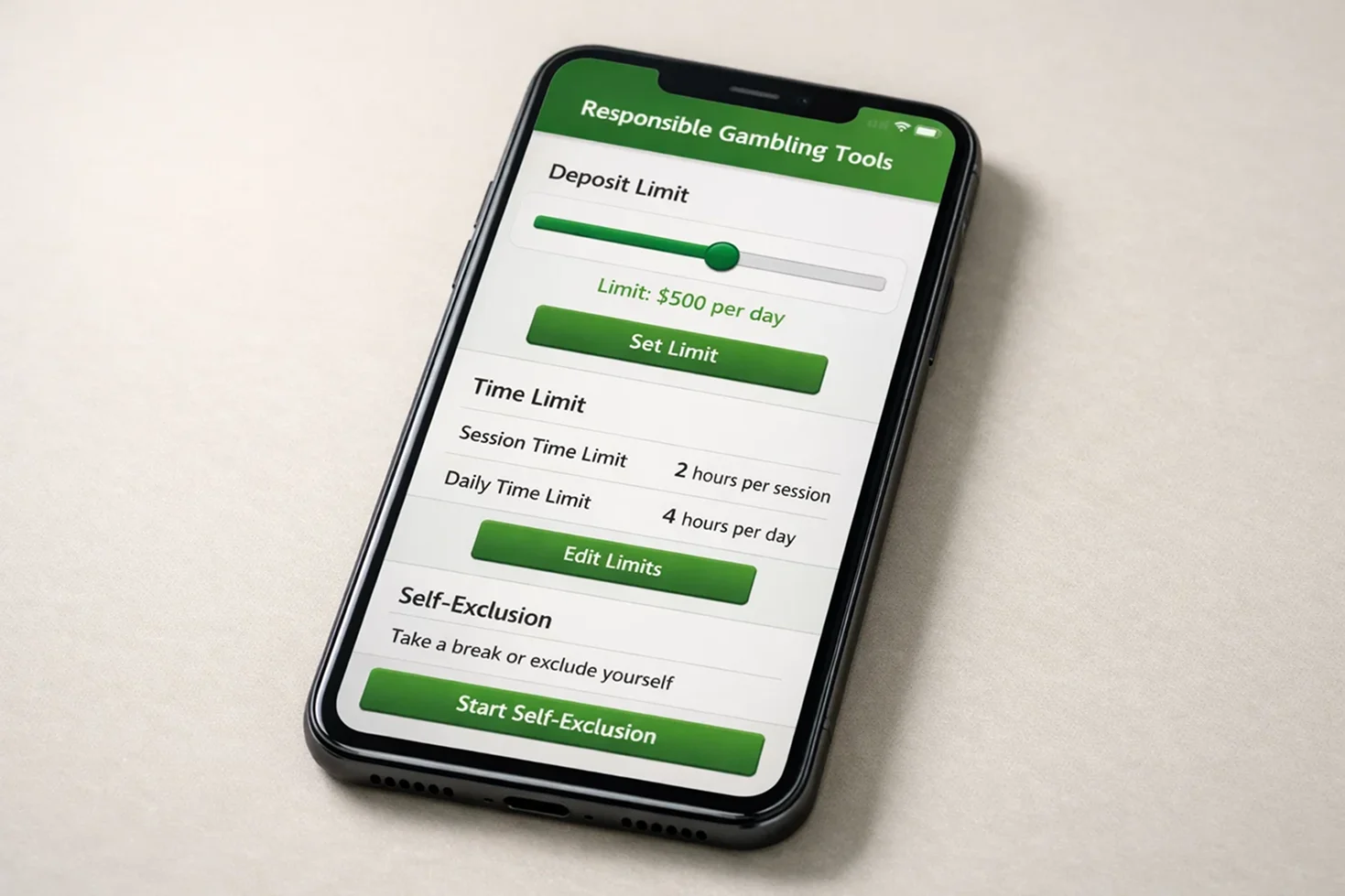
Football betting should enhance entertainment, not create problems. Maintaining healthy relationships with gambling requires ongoing attention and honest self-assessment.
Set time limits for betting activity just as you set financial limits. Spending hours daily analyzing matches and placing bets may indicate problematic engagement regardless of financial results. Balance betting with other activities and relationships.
Never borrow money to bet. If your bankroll is depleted, stop betting until you can allocate entertainment funds without borrowing. Borrowed money for gambling creates debt spirals that damage far more than bankrolls.
Be honest with yourself about whether betting remains enjoyable. If betting causes stress, anxiety, relationship conflict, or obsessive thinking, these signs suggest problematic patterns developing. Enjoyable entertainment does not produce persistent negative emotions.
Use operator tools designed to support responsible gambling. Deposit limits cap how much you can add to accounts within defined periods. Loss limits cap how much you can lose. Time-out features allow temporary account suspension when you need breaks. Self-exclusion options provide longer-term restrictions for those who need them.
Talk to someone if you are concerned about your gambling. Friends, family, or professional counselors can provide perspective that is difficult to maintain alone. Organizations like GamCare, Gamblers Anonymous, and national helplines offer confidential support for people experiencing gambling difficulties.
Recognize that most bettors lose money over time. This reality does not make betting wrong or irresponsible, but it does mean approaching betting with profit expectations usually leads to disappointment. Treating betting as entertainment with occasional wins rather than an income strategy maintains healthier perspective.
Take breaks from betting periodically regardless of results. Stepping away for weeks or months provides perspective and prevents gradual escalation of involvement. Returning after breaks often reveals patterns that were invisible during continuous engagement.
Football betting offers genuine entertainment value for millions of people who approach it appropriately. Understanding the mechanics, managing money wisely, and maintaining perspective allows you to enjoy betting while minimizing risks. The knowledge in this guide provides foundation for that balanced approach. What you build on that foundation depends on the choices you make going forward.
