

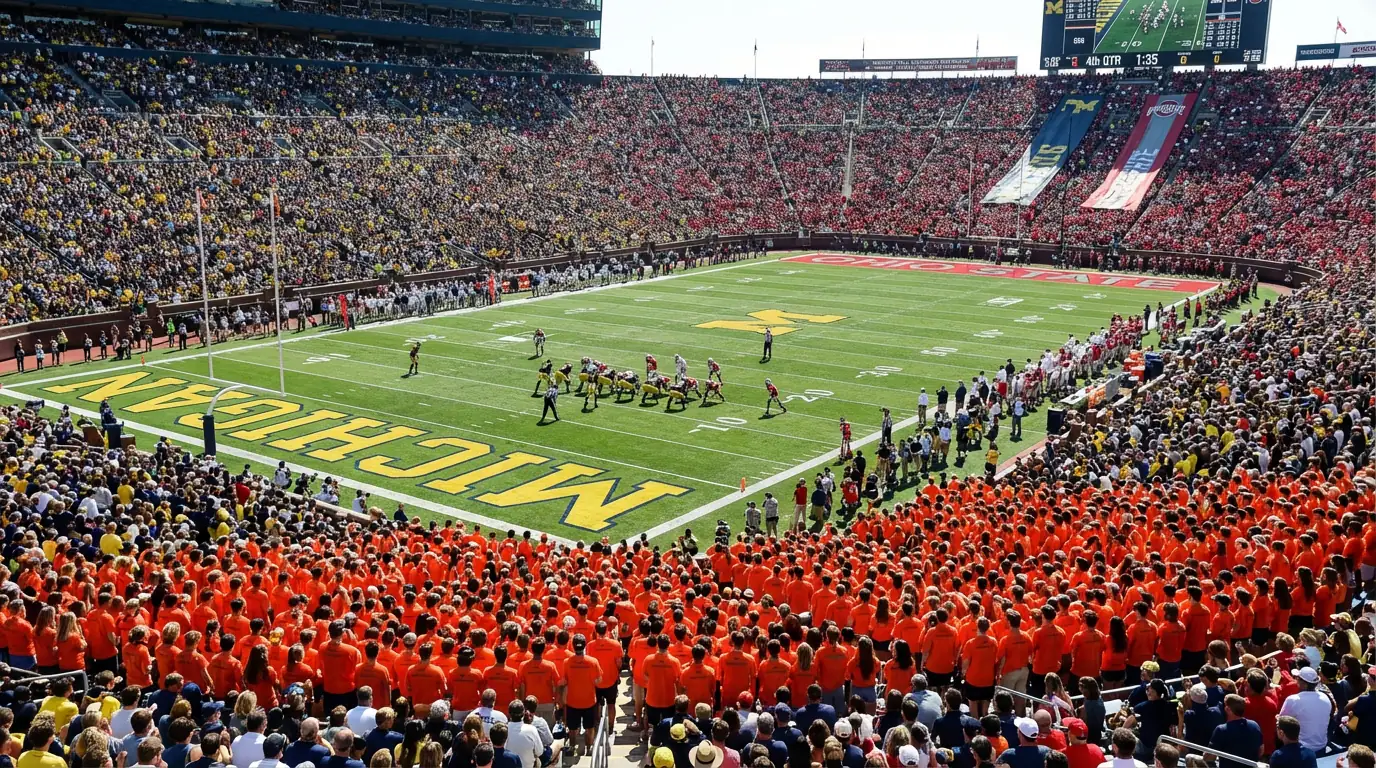
College football is a different animal from the NFL, and treating it the same way is a reliable path to losing money. The talent gap between teams is wider, the sample size of meaningful games per team is smaller, the roster turnover is faster, and the emotional intensity of rivalries creates volatility that professional football simply does not produce. For bettors, these differences are not problems — they are opportunities. The inefficiencies in the college football betting market are larger and more frequent than in the NFL, precisely because the volume of games is enormous and the bookmaker cannot dedicate the same analytical resources to every match.
This guide covers the key markets in NCAAF betting, the structural differences from NFL wagering that every bettor should understand, and the approaches that exploit college football’s unique characteristics.
College Football vs. NFL Betting Differences
The most fundamental difference is the talent disparity between teams. In the NFL, the salary cap and draft system create competitive balance — the gap between the best and worst teams is meaningful but narrow. In college football, the gap between an SEC powerhouse and a mid-major programme can be enormous. This talent disparity produces more blowouts, more extreme spreads, and more matches where the outcome is effectively decided before kickoff.
Spreads of 20 points or more are common in college football and virtually nonexistent in the NFL. These lopsided lines create a distinct betting dynamic: the question is not whether the favourite wins, but whether the favourite covers a large number. A team favoured by 28 points might win by 35 (covering) or by 21 (failing to cover), and the factors that determine this margin — whether the coach keeps starters in the second half, whether the backups are competent, whether the favourite takes its foot off the gas — have little to do with traditional football analysis.
Roster turnover is another critical difference. NFL rosters evolve gradually, but college rosters can change dramatically year to year as seniors graduate, players enter the transfer portal, and freshmen arrive. A team that finished last season ranked in the top ten may look very different in September after losing its starting quarterback, two offensive linemen, and a cornerback to the NFL draft. Pre-season rankings and last year’s results are even less reliable in college football than they are in the NFL, because the team you are betting on may bear only a passing resemblance to the one that generated those results.
The sheer volume of games creates both opportunity and risk. On a busy college football Saturday, there might be 50 or more FBS games on the slate. The bookmaker cannot price all of these with the same precision as a 16-game NFL Sunday, which means inefficiencies are more common in smaller conferences and less-publicised matchups. But the flip side is that information is harder for the bettor to gather too — you cannot watch every game, and relying on box scores and statistical summaries from leagues you do not follow regularly is a recipe for uninformed betting.
Spreads and Totals in College Football
The point spread is the dominant market in college football betting, just as it is in the NFL. The pricing mechanics are identical — the spread represents the bookmaker’s assessment of the expected margin of victory, and both sides are typically priced at -110. But the behavioural patterns that create value are different.
Public betting in college football is heavily influenced by brand recognition. Blue-blood programmes — Alabama, Ohio State, Georgia, USC — attract disproportionate public money regardless of their current form, because casual bettors back names they recognise. This brand effect inflates the spread on popular teams, particularly in early-season games before the public has recalibrated its perception. Fading overvalued public favourites — betting against the popular team when the line has moved beyond what the matchup warrants — is one of the most well-documented profitable strategies in college football betting.
Totals in college football tend to be higher than in the NFL because offensive schemes are often more aggressive and the talent gap can produce one-sided scoring runs. Over/under lines of 55 to 65 points are common in matchups between high-scoring programmes, compared to the 42 to 48 range typical of NFL games. The same analytical approach applies — compare team-level scoring and defensive statistics to the posted total — but the wider range of plausible outcomes means there is more variance per bet, which requires appropriate bankroll management.
Player Props and Conference Futures
Player prop markets in college football have expanded significantly with the growth of legal US sports betting. Passing yards, rushing yards, receiving yards, and touchdown props are available for most televised games, though the market depth is thinner than for NFL player props, particularly for games outside the Power Four conferences.
The analytical edge in college player props comes from the mismatch factor. When a team with an elite quarterback faces a defence ranked in the bottom third of the conference for passing yards allowed, the prop lines on that quarterback’s passing yards may not fully reflect the severity of the mismatch. NFL matchups rarely produce this degree of schematic exploitation because defensive coaching is more consistent, but college football’s wide talent gaps mean that specific player-versus-defence matchups can be wildly asymmetric.
Conference futures — betting on which team will win the SEC, Big Ten, Big 12, or ACC championship — are popular pre-season markets that offer some of the longest-running value in college football. These markets open months before the season and the odds evolve as results come in. The optimal approach mirrors outright tournament betting: identify teams whose pre-season odds do not reflect their actual probability of winning the conference, and take positions early before the market adjusts. Conference knowledge is essential here — understanding which divisions are weakest, which teams have favourable schedules, and which coaching staffs have a track record of development gives you an edge over the generic pre-season rankings.
Tips for Profitable College Football Betting
Specialisation is the single most effective strategy in college football. With over 130 FBS teams spread across multiple conferences, no bettor can follow everything. The bettors who consistently profit focus on one or two conferences, watch every game, track roster changes and recruiting classes, and build a deep understanding of the teams, coaches, and competitive dynamics within their chosen niche. A bettor who knows the Mountain West inside out will find more value in that conference than a generalist scanning every line on a Saturday morning.
Early-season games are the most inefficient period of the college football betting calendar. The bookmaker’s models are based on pre-season projections that have not yet been validated by results, and public perception is anchored to last season’s narratives. Teams that lost key players to the draft may still be priced as if they are last year’s version. Teams that made transformative transfer portal acquisitions may be undervalued because the public has not adjusted. The first three to four weeks of the season are where the sharpest college football bettors make a disproportionate share of their annual profit.
Line movement in college football is more informative than in the NFL because the market is less efficient. A line that moves two or three points between opening and closing in a Group of Five conference game is a significant signal — it often reflects sharp money from bettors with specific information about injuries, depth chart changes, or motivational factors that the broader market has not priced in. Tracking line movement across multiple bookmakers gives you a window into where the informed money is going, even if you do not have the same information yourself.
The Biggest Market with the Most Blind Spots
College football is the rare betting market where passion and ignorance coexist in equal measure. Millions of fans bet on their favourite team every Saturday without checking the spread, the injury report, or the opposing team’s defensive statistics. This emotional money moves lines and creates value for the disciplined minority who treat college football as an analytical exercise rather than an extension of their fandom. The market is big, loud, and full of blind spots. For bettors willing to do the work that most fans will not, those blind spots are where the money lives.
