

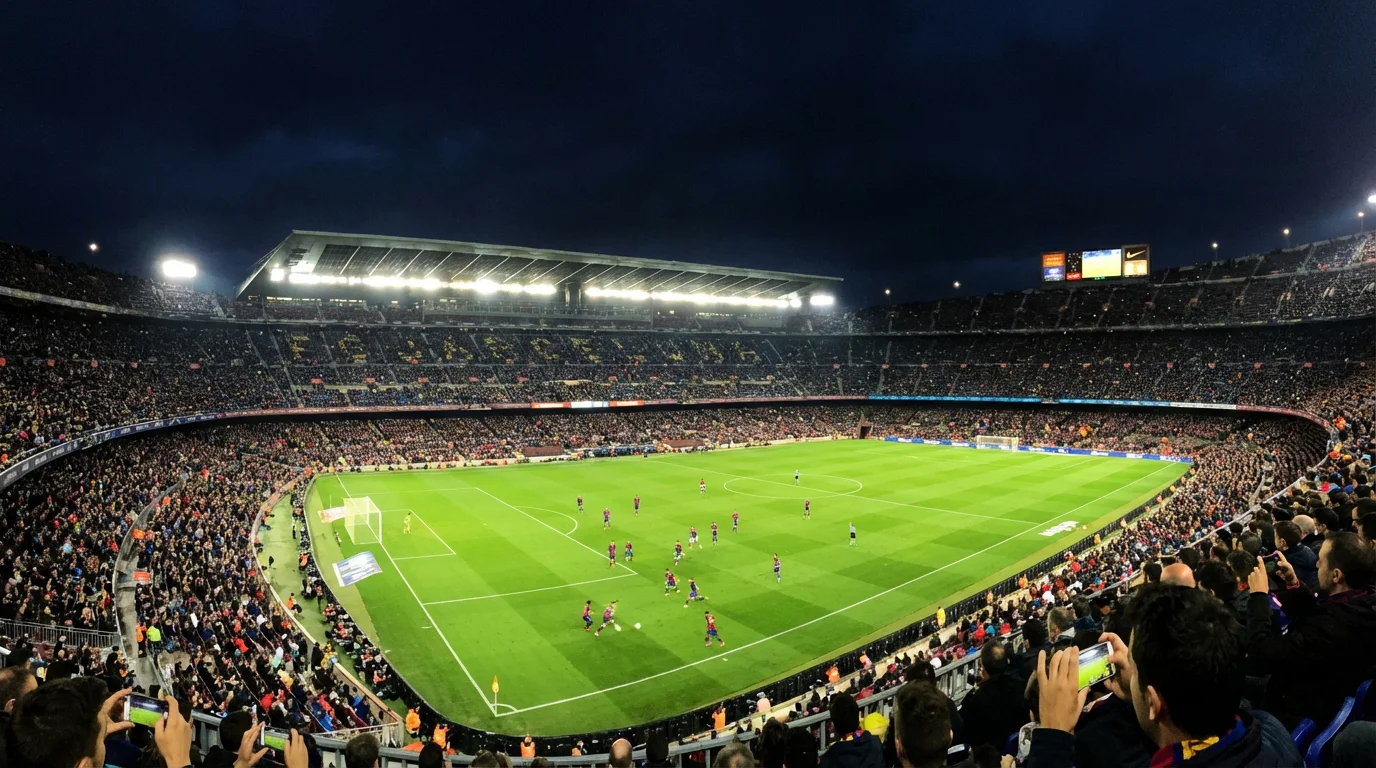
Pre-match betting is analysis. In-play betting is reaction. The two require completely different skills, and the bettor who excels at studying form tables is not necessarily the one who thrives when the odds are ticking every thirty seconds during a Premier League match. Live football betting has exploded in popularity because it lets you use your eyes — what you are actually watching — as a tool for making decisions, rather than relying purely on statistics assembled before kickoff.
The growth of in-play betting has also transformed how bookmakers operate. Markets that once closed at kickoff now stay open for 90 minutes (plus added time, plus penalties if you are lucky). The volume of live wagers at major sportsbooks regularly exceeds pre-match betting for big fixtures. This guide covers how live odds work, which markets are most profitable in-play, and what to look for in a bookmaker’s live betting platform.
Mechanics of In-Play Football Betting
In-play betting — also called live betting — allows you to place wagers after a match has kicked off, with odds that update continuously based on what is happening on the pitch. A goalless first half in a match priced at over 2.5 goals before kickoff will see those odds lengthen considerably as the minutes tick by. A red card for the favourite will see their match-result odds drift in real time. Everything that happens on the field is reflected in the market, often within seconds.
The range of in-play markets at a top bookmaker is staggering. You can bet on the next goal, the next corner, the next card, the correct score from this point forward, and a dozen other micro-markets that would have been unthinkable ten years ago. Some bookmakers even offer ball-by-ball markets in the final minutes of tight matches, though liquidity on those tends to be thin. The point is that live betting is not just “who wins” updated in real time — it is an entirely separate ecosystem of markets that only exist because the match is in progress.
For many bettors, in-play wagering is more fun than pre-match precisely because the feedback loop is immediate. You watch a team dominating possession and building pressure, you bet on them to score next, and you find out whether you were right within minutes rather than days. That immediacy is addictive — which is also why responsible bankroll management is especially important in live betting environments.
How Live Odds Move
Live odds are driven by a combination of algorithmic models and trader input. The algorithm monitors match events — goals, cards, substitutions, time elapsed — and recalculates the probability of each outcome in real time. Human traders then review the algorithm’s output and adjust based on factors the model might miss: the tone of the game, tactical shifts, visible fatigue, or a goalkeeper who looks shaky despite the scoreline.
The speed of adjustment varies by bookmaker. The best platforms update odds within seconds of a key event. Score a goal, and the match result market reprices almost instantly. The window between an event happening and the odds updating is where sharp bettors make their money — if you can get a bet in before the new price loads, you might catch a brief moment of value. Bookmakers counter this with bet acceptance delays and auto-rejection of bets placed during rapid odds movement, which is a constant cat-and-mouse game between the platform and its fastest users.
Momentum is another factor that drives live odds even when nothing has technically “happened.” A team pinning their opponent back with sustained pressure will see their odds shorten even if the score remains level. Bookmakers track in-game stats — expected goals, territorial advantage, shot frequency — and price this momentum into the market. The bettor who understands this can exploit moments where the market has overreacted to a spell of pressure that is unlikely to produce a goal, or underreacted to a tactical change that fundamentally shifts the balance of the match.
Best Markets for Live Football Wagering
Not all in-play markets offer equal value. Some are priced tightly and updated instantly, leaving little room for the bettor to find an edge. Others are slower to adjust or based on factors that an attentive viewer can assess better than an algorithm.
The next goal market is one of the most popular live bets and one of the hardest to beat consistently. Bookmakers price this aggressively because the volume is enormous. Where value sometimes appears is in the “no more goals” option during the final 15 minutes of a low-scoring game — the market occasionally underestimates how much teams close up shop when protecting a lead or settling for a draw.
Over/under goals at alternative lines offer interesting in-play opportunities. If a match is 0-0 at halftime but the expected goals data suggests both teams have been creating chances, the over 1.5 goals line might be priced attractively for the second half. Conversely, a match with an early goal often sees the market overreact, pushing over 2.5 to short odds when the game may well tighten up after the opening exchanges.
Corners and cards markets tend to be less efficiently priced in-play than goal markets because they receive less attention from both bettors and bookmakers. A team trailing in the second half will push forward, generate corners, and commit tactical fouls that produce cards. This pattern is predictable enough that a systematic approach to backing corners and cards in specific game states can yield positive results over time.
Platform Speed Matters More Than You Think
In live betting, the platform is not a neutral medium — it is an active participant in your success or failure. A bookmaker’s live betting interface determines how quickly you see updated odds, how fast your bet is confirmed, and whether you can react to what you are watching before the market catches up.
The fastest live betting platforms process bet requests in under two seconds and display odds updates with minimal latency. bet365 has historically set the standard here, with a live interface that reacts to match events almost in real time. DraftKings and FanDuel have invested heavily in their live infrastructure as well, particularly for NFL and major European football, and both deliver a smooth experience on mobile. On the other end of the spectrum, some regional bookmakers operate with noticeable delays — three to five seconds between an event and the odds updating — which creates frustrating gaps where your bet is placed at a stale price and then rejected once the system catches up.
Capitalizing on momentum shifts requires quick execution, which is why choosing a responsive in-play football betting platform is crucial for success.
Bet acceptance rates are the hidden metric that separates live platforms. Even if a bookmaker’s interface looks fast, it means nothing if your bets are consistently rejected or referred to a trader for manual approval. Some bookmakers are notoriously aggressive about rejecting live bets from accounts they flag as sharp — a practice that is legal but infuriating. Before committing to a platform for serious live betting, it is worth testing bet acceptance during a busy match to see how often your bets go through at the displayed price.
Streaming integration makes a meaningful difference as well. The best live betting experience is one where the match feed and the betting markets sit side by side on the same screen. bet365 offers live streaming for a wide range of football leagues directly within the app, and the synchronisation between the video feed and the odds is tight enough that you are betting on what you are seeing, not on what happened ten seconds ago. Platforms without streaming leave you reliant on third-party video sources that may be on a different delay, creating mismatches between what you see and what the market shows.
Strategies for Live Football Betting
The most reliable live betting strategy is also the most boring: wait for overreactions and bet against them. Football matches are full of emotional swings — an early goal, a contentious red card, a missed penalty — and the market reflects those emotions in real time. The early goal in a match between evenly-matched teams often causes the market to overcorrect on the total goals line, pushing over 2.5 to odds that do not reflect the likely pattern of the remaining 80 minutes.
Watching the game is non-negotiable for in-play betting. This sounds obvious, but a significant number of live bettors are placing wagers based solely on the stats displayed in the bookmaker’s interface. Stats are useful, but they miss context that only a viewer can see: is the team dominating possession actually creating chances, or are they passing sideways in midfield? Is the trailing team showing urgency or resignation? These qualitative judgments are where human bettors can still outperform algorithms.
Timing your bets around predictable game phases improves results as well. The period between the 60th and 75th minute is when managers typically make tactical substitutions, and these changes often shift the balance of play. A team bringing on a fresh striker while trailing is likely to push aggressively, creating opportunities for goals, corners, and cards. Betting on increased second-half activity during this window — particularly in matches where the scoreline is tight — is a pattern that repeats across leagues and seasons.
The other strategic principle is strict discipline on stake sizing. Live betting is fast, emotional, and designed to keep you engaged. The temptation to increase your stake after a losing bet or to chase a near-miss is stronger in-play than in any other betting environment. Setting a per-match or per-session stake limit before you start is essential. If you have wagered your allocated amount and lost, close the app. The match will end without your participation, and your bankroll will thank you the following week.
You Are Betting Against the Clock, Not Just the Bookmaker
Live betting adds a dimension that pre-match betting lacks: time pressure. Every decision carries urgency because the odds are changing, the match is progressing, and the window for a particular bet might close in seconds. This pressure is exhilarating, but it also leads to sloppy decisions.
The best in-play bettors are paradoxically the most patient. They watch, they wait, and they strike when they see a specific scenario they have prepared for — not when they feel the urge to be involved. Treating live betting as a series of pre-planned responses to game situations, rather than a reactive scramble, is the single biggest edge you can give yourself. The bookmaker wants you to bet on impulse. The smartest play is often to let a market pass entirely and wait for the one where you genuinely see something the odds do not reflect.
Stay ahead of the game and secure the best live odds by utilizing our premier football betting resource throughout the match.
